

Narrow your search
Modification Details
Translate Evilution
german french spanish italian greek finish danish polish japanese russian
Search Evilution
Most Viewed Pages
Most Rated Pages
Fit New Brake Discs
The standard Brakes are OK for a standard smart but when you start getting serious with the mods you have to get serious with the brakes.
If you are fitting new pads as well, you will also need to look here.

Legal Limit

On the smart car, the brakes discs are 9mm thick when new. The maximum wear they can have before being replaced is only 1mm. You can measure them with a caliper gauge, if they are anywhere near 8mm or below you should change them ASAP.

Fitting The Discs

You will need the following tools:
  • Jack,
  • Axle stand,
  • 15mm socket to remove wheel,
  • 13mm ring or open end spanner,
  • 17mm open end spanner,
  • E18 socket,
  • T30 screwdriver,
  • Clamp to push piston back.

    First of all loosen front wheel nuts, jack up the car and place the axle stand securely. Lower onto the stand. Check for security of car on stand - you're going to be working on it!


    With the wheel removed it will look like this.

    You are now going to remove the brake pads prior to removing the brake disks. Undo the top bolt using the 13mm spanner and hold the lock nut with the 17mm spanner.


    With the top bolt removed you can swing the brake piston carrier to the rear but do not
    let the weight hang on the brake hose. Keep it supported. You can remove the brake
    pads noting the position that they are fitted in. The rear pad has a metal prong that will help you see the difference between the two pads.


    Now comes a slightly more tricky bit. You need to remove the brake caliper in order
    to have access to remove the brake disk. Rotate the piston back into position
    (without the pads in place) and lightly do up the bolt to secure it. You need to identify
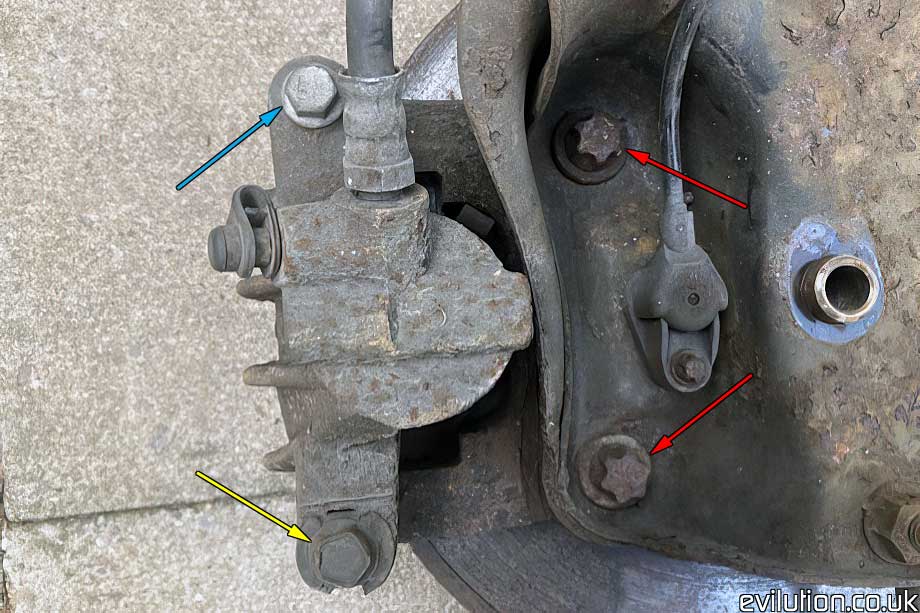
    the 2 bolts at the rear of the brake assembly that hold the caliper into position. These
    can be undone using the E18 socket. The next photo shows the bolt holes on the
    caliper after removal and will give you a sense of where the bolts are.


    Ensure that the caliper is supported in order not to stress the brake hose.


    Then remove the small T30 screw holding the disk to the hub.


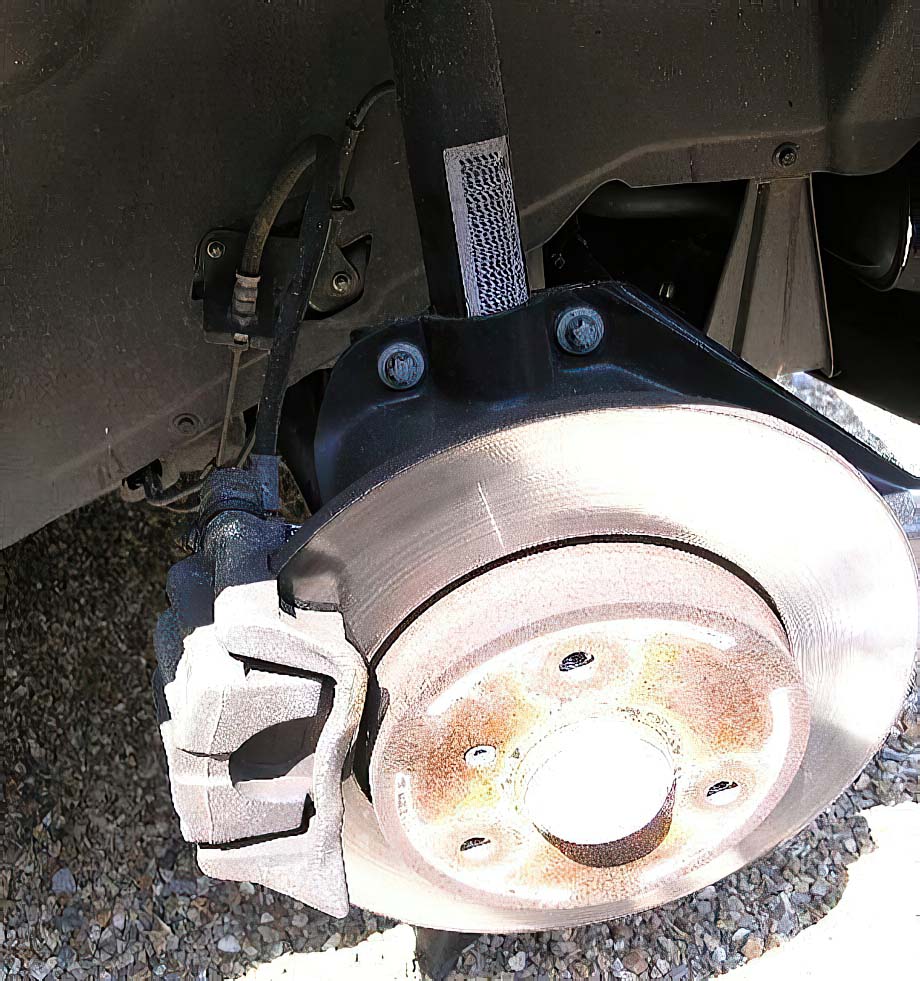
    Once you have removed the disk - it may need a tap with a soft hammer if it is stuck around the hub centre with rust. It should then look like this. You can see that I've secured the caliper out of the way. You can also see the 2 bolts holes where the caliper was bolted.


    I've included the following photograph as it gives you a better
    view of the ABS reluctor ring and sensor.


    Clean up around the hub and remove the rust where the disk fits the hub assembly.
    Refit the new disk and secure it using the T30 screw. Ensure the new disk is kept
    grease free and handle it with clean hands avoiding the braking surface. You can
    now carefully refit the caliper and its 2 bolts and torque them to 115Nm.
    Be sure not to damage the new disk when doing this. Once secured and retightened,
    undo the 15mm top bolt on the caliper and push the piston carrier to the rear again.

    You will now need to push the brake piston back into its housing and before doing
    so check that the brake fluid cylinder is not too full. If it is you may need to remove
    some brake fluid to allow the piston to move back without spillage at the reservoir.
    I managed to push my pistons back just using my fingers. If you can't do this use
    a thin piece of wood and a clamp to force the piston back taking care not to damage
    the piston face and its rubber dust sleeve.


    You can now refit the old brake pads into position. It is advised to use a small amount of copper grease on the rear faces of the pads to avoid brake squeal - be careful not to overdo this or get it on the face of the pads or disc


    Once they are in place you can reposition the piston carrier and reinsert and tighten the top bolt. The springs on the back of the pads should not stick through the back of the caliper and the pressure of the spings should be felt when you reinsert the top bolt.


    Clean the entire disc front and back with brake cleaner to remove the protective coating.

    Before refitting the wheel pump the brake pedal to move the piston back
    into contact with the pads. Check the brake fluid in the reservoir. Refit the
    wheel and tighten the bolts to 110 nm (approx 80 lb ft).

    Now go and do the other side. Carefully drive the car to settle the pads and
    ensure that the brakes are working properly. It will take a while miles to bed
    them in depending on usage so you will need to drive carefully while this happens.

    Types of Brake Disc

    There are plenty of discs to choose from,
    here is everything you need to know.


Click if Info Helpful

Buy me a drink

Contact us about mod

Print page

Translate

Back to top