


Mod Description
The Lambda (O2) sensor is by far the most common fault that brings up the engine fault light.Mod Details
PremiumNo Difficulty
 Mod ID421
CreditEvil/Roland
For
Mod ID421
CreditEvil/Roland
For Linkhttps://www.evilution.co.uk/mod/450-lambda-sensors1.htm Copy to Clipboard
Removing The Sensor
Remove the rear panels, this can be found here.
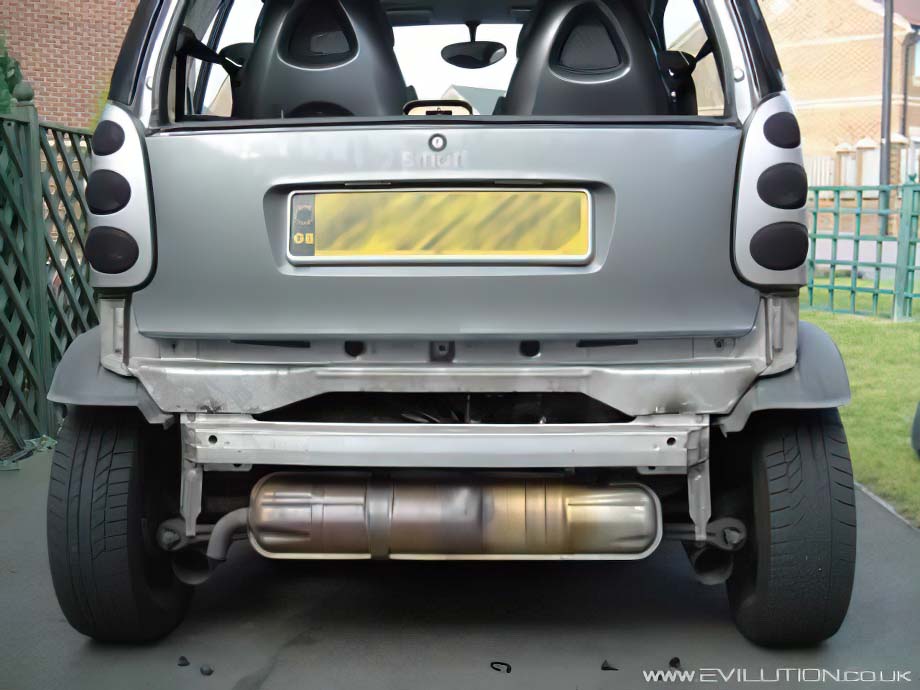
Remove the crash bar using a Torx 45 bit.
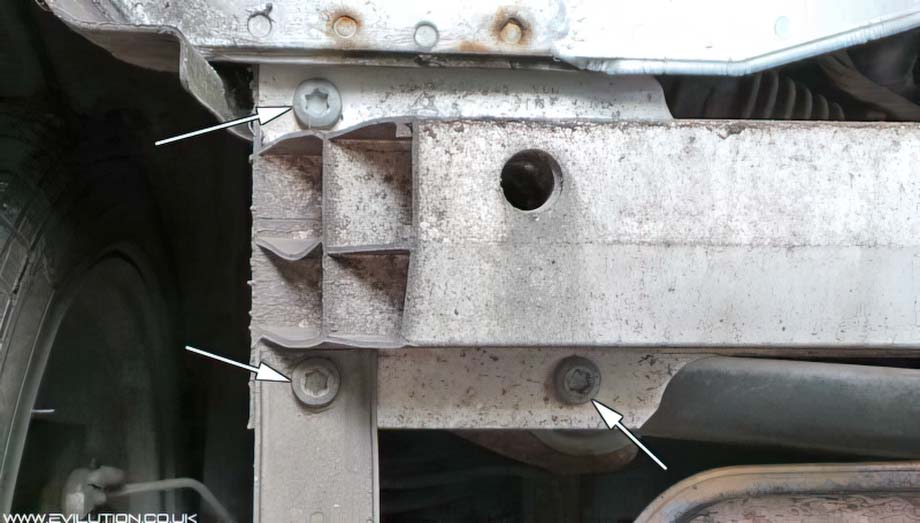
Locate the pair of lambda sensors. There’s 1 in the exhaust and 1 in the turbo. Trace the wiring to the connectors, pull the connectors out of their clips.
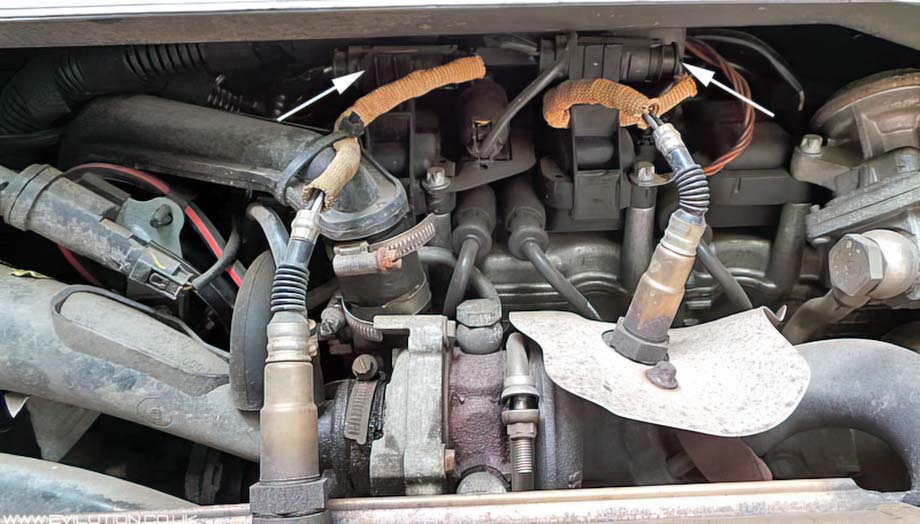
Disconnect both connections.
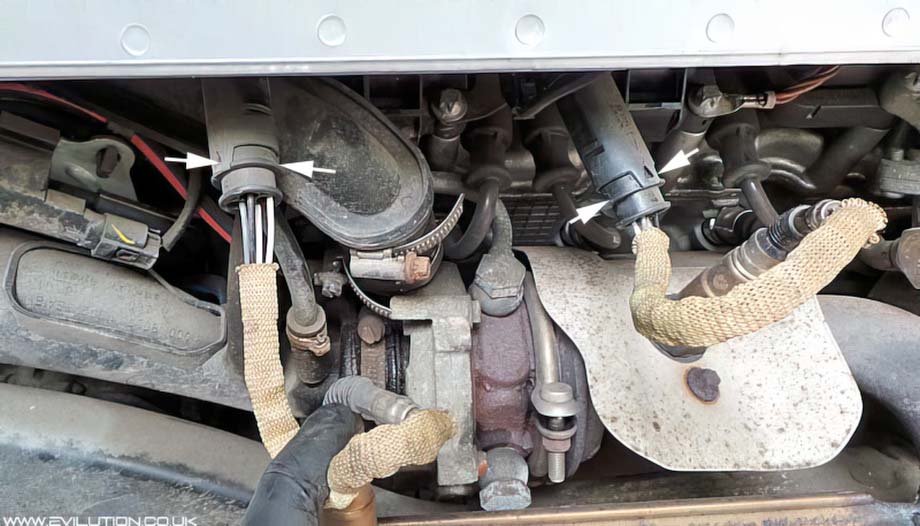
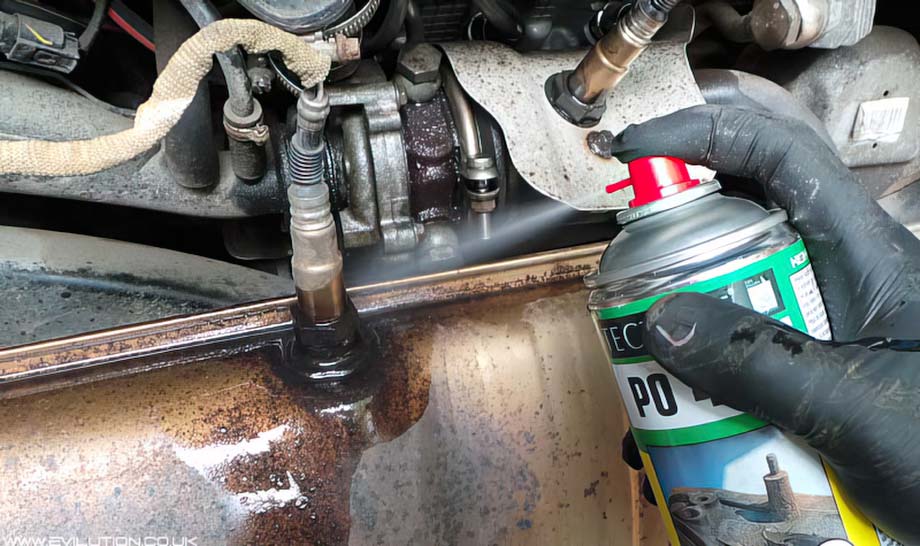
Ideally you should have sprayed the sensors in penetrating lubricant every day for the passed few days. This alloys the oil to seep in and loosen the threads. Spray on 1 last spray, wait 10 minutes and carry on.
Use a 22mm ring spanner. This gives more grip. thread the wiring through the spanner. A standard spanner can work but can slip and damage the sensor and the surrounding area. Ring spanners have another advantage that they have a smaller outside diameter and a cranked head.
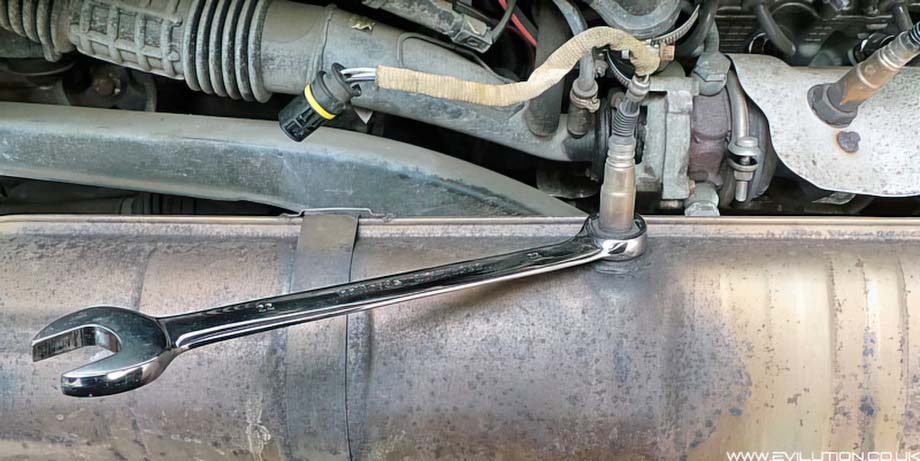
It probably won’t come out easily but you can persuade the other end of the spanner with a rubber mallet to break the seal and get it going.
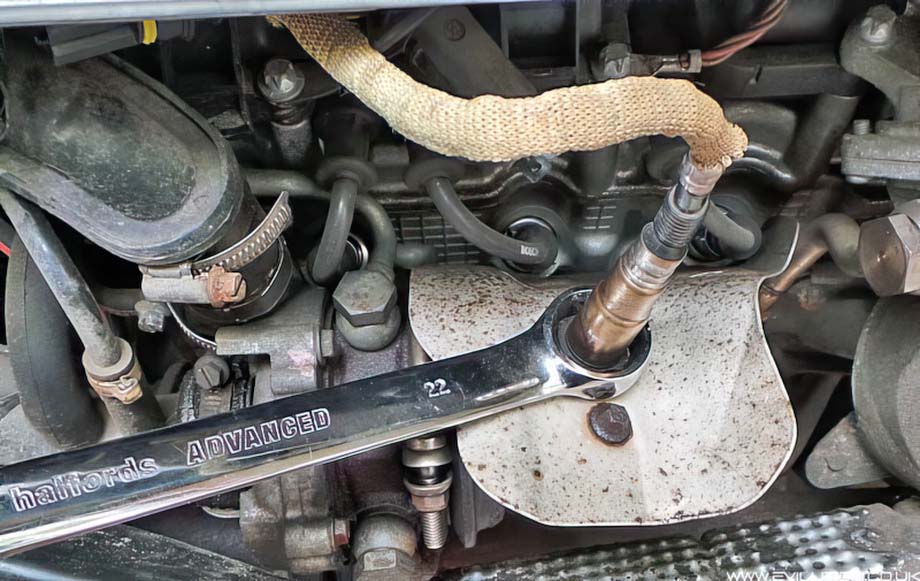
The same applies for the turbo lambda sensor.
Replace Or Repair?
If your sensor has just failed, it will probably just need replacing but not always. The opposite in fact if you have used contaminated fuel, there is no reason the sensor cannot be repaired by yourself.
Replace
Don’t go to smart. You will get charged a lot for one, if they have one. Your best bet of getting a good deal is contact a local motorfactors (look in the yellow pages for your nearest one). The sensor is a standard Bosch part and the same for both sensors. Look for part numbers here.
Repair
Obviously not being touted by garages as they obviously want your money for a replacement. Although the petrol manufacturer hasn’t declared what the petrol was contaminated with, it is obviously coating the sensor so they stop working.
The is no reason that this coating cannot be cleaned off to allow the sensor to work again, you can try petrol, brake cleaner or another type of solvent. The worse that can happen is it still won’t work but surely it’s worth a try.
Refitting
It is a good idea to lightly copper grease the thread of the sensor before it is replaced, it will allow an easier removal next time. When you tighten the sensor with the 22mm ring spanner, you don’t need to swing on it, nipped up tight is perfectly fine.
With the sensor in place, reconnect the wiring plugs and disconnect the battery for 10 minutes. Doing this will clear the light on the dash. Reconnect and try the car.
It will take about 50 miles for the ECU to build up a voltage table before it decides whether the lambda sensor is OK or not. If the light comes on again, the sensor needs changing.
Sensor Number
Apart from very early 600cc fortwos, all other fortwos have 2 lambda sensors. Bank 1, sensor 1 and bank 1, sensor 2.
Normally, sensor 1 is in the upstream position (nearest the engine) and sensor 2 is the downstream sensor (furthest from the engine).
The downstream sensor is usually in the catalytic convertor can. The upstream sensor is either in the turbo or the exhaust manifold.
Be careful with generic error code readers because they don’t always give out the correct data.
As I said earlier, the upstream sensor should be 1 and the downstream sensor should be 2.
However some OBD readers will label the upstream sensor as 0 and the downstream sensor as 1.
If you want to be 100% sure, disconnect both sensors and see if your code reader brings up error codes for 1 and 2 or 0 and 1.
2007 Update
Since the fuel contamination problems in early March 2007, a few people have found their car to be sluggish, the engine light illuminating or the car fails to run.If you have an X-Gauge you can check the error code, if it comes up as:
- P0130
- P0131
- P0132
- P0133
- P0134
It shows the lambda sensor in the turbo is faulty. (upstream).
If the code is displayed as:
- P0136
- P0137
- P0138
- P0139
- P0140
It means the lambda sensor in the exhaust is faulty. (downstream).
P stands for Powertrain, this tells us it is an engine fault.
0 informs us that it is a generic code and not a manufacturer specific one.
1 tells us the system that is faulty, in this case ‘Emission Management (Fuel or Air)’
The last 2 digits relate to a particular part and problem.
In most cases, it will be the upstream sensor that will suffer.