

Waterproofing The SAM Unit
It is a fairly common complaint that the Roadster leaks and the water destroys the SAM unit causing electrical problems. Lets waterproof the SAM unit
Since the Roadster was 1st released there was a problem with water ingress. Water inside the
car wasn't the main issue as that just made it steam up and smell. The problem was it had a
tendency to get into the SAM unit which controlled a lot of the electrical equipment in the car.
Water in the SAM could cause wipers not stopping or starting, horn problems, central
locking faults, lights not working, tacho readout adding thousands of miles,
immobiliser not deactivating, car not starting, windows malfunctioning, roof opening
on its own, etc. Pretty much all the non engine electric could be affected.
There were only 3 leaks that endangered the SAM unit. Poorly bonded windscreen,
poorly bonded bulkhead or the most common was a leaking wiper bucket. This was a
plastic bucket that sat below the wiper motor that channelled water from the
scuttle to the underside of the car. Unfortunately the seal on this bucket isn't suitable
for the job it is asked to do and quite often this seal isn't even fitted correctly.
This wiper bucket was unfortunately positioned right above the SAM unit so it was inevitable
that the water was going to drip onto the wires and travel into the SAM unit. This would short
out the microchips and cause the electrical troubles that people have seen.
Roadster owners have battled against leaks, desperately trying to stop their SAM
unit from going for a swim but when I became a Roadster owner myself, I realised
that they were going about it the wrong way.
Waterproofing The SAM Unit
Instead of waterproofing the car, just go straight to the source of the trouble and waterproof that.
It should be remembered though that is a prevention and not a cure. Don't think that waterproofing
your SAM is all you need to do. You do need to stop the water getting in in the first place.
This is just a prevention just in case (or when) it does happen.
I studied the angle of the wiper bucket and noticed that it naturally angled forwards meaning
that the water, more often than not, would drip off the front which was positioned directly above
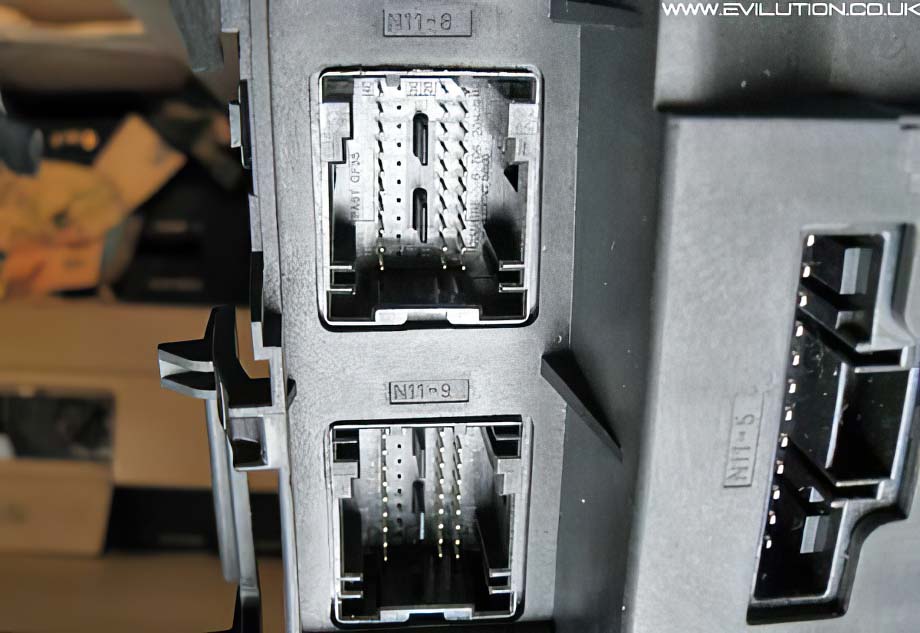
connections N11-8 and N11-9. The biggest problem with that is connection 8, 9 and 10 are
connected to a satellite board inside the SAM unit that carried all of the microprocessor chips.
These are the parts that are destroyed by water. Despite being low voltage,
smaller track spacings and water absorption increases the likelihood of a
short circuit which damages the transistors inside the chips.
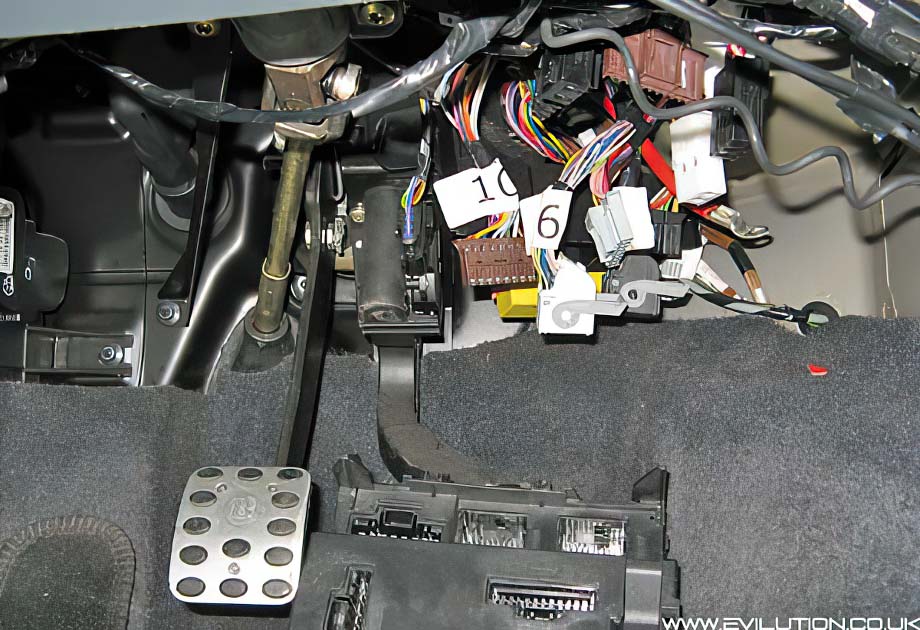
Remove the SAM unit from the car. I labelled the wires but all the connections
are keyed differently so they can only be placed back into their correct sockets.
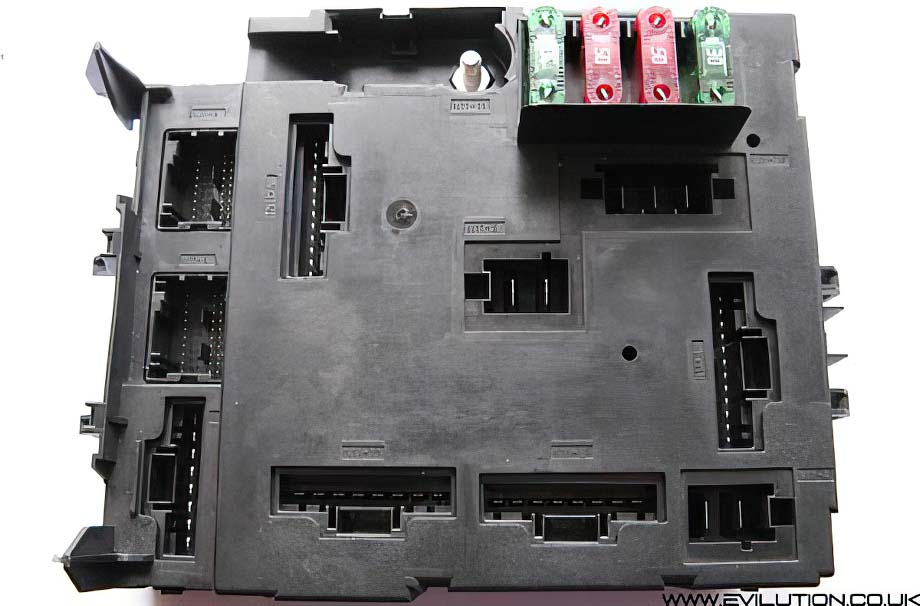
This shows the top of the SAM unit. You need to remove the 4 large fuses from the top.
Below is N11-8 and N11-9 which are the 2 connections that suffer from water ingress.
Flip the SAM unit over and remove the 3 Torx10 screws. You don't need to remove the other fuses.
Around the outside are 10 clips that need unclipping.
Lift the lid off. Look at the areas circled, you will find more clips holding the board in.
Finally there are 2 tabs on each side that need pushing in so the PCBs can be removed.
Be careful where you hold the bare SAM unit, you don't want to damage any of the
components with static. The satellite board at the bottom of the next picture is
the one that contains all of the microchips.
The chips populate this small board...
...on the top...
...and the bottom. All of these need to be protected.
This is what I used the 1st time. Liquid electrical tape by Performix.
On this project I just used the brush on type.
Mask off the 3 sockets.
Paint the back with the liquid electrical tape. Allow 20 minutes between coats and do
a minimum of 2 coats. I did 1 standard coat and 2 thick coats to build up the protection.
Same with the top side of this board.
Cover as much as you can on this board as the more you cover, the more protection you will have.
Don't be shy with this stuff. It is important that you get this fluid underneath the socket housings.
Although you should only need to paint the small satellite board with this fluid, you can please yourself and paint as many of the PCBs as you like. Remember to allow it to dry before coats and don't try to apply it too thick on the 1st coat. Just don't get it on any connection pins.
Reassemble the SAM unit and allow it to dry in standard indoor temperatures
for at least 24 hours before refitting to the car to ensure that it has cured fully.
Refit to your car and worry less about water ingress.
Conformal Coating
The alternative to protecting your SAM unit is a product called conformal coating.
It is a clear spray that the military use on missile and submarine electrics.
It has an advantage over the liquid tape used above in that it is a thinner liquid so it will
wick underneath the sockets and chips on the board. 3 coats should be done to be sure.
Conformal coating is a clear spray so make sure you cover everything. A good
conformal coating spray is reactive to ultraviolet so you can check for coverage.
The drawback with conformal coating is that it is really quite expensive, however, with
1 can of spray you can do 3 or 4 SAM units so buy it, use it, pass it on to another owner.
Additional info
Any water running into N11-8 and N11-9 will leak through the holes, onto the PCB, off the PCB
and into the car through a tiny drain port in the bottom of the SAM unit under socket N11-10.
Importantly it won't short circuit anything as it passes through.
The next thing to look at is corrosion of the 60 pins in N11-8 and N11-9.
A small wipe of copper grease on each pin should inhibit the corrosion and despite what
you think, copper grease is not conductive at that low a voltage. Don't go mad though.
But Another Site Says...
It has been mentioned that another site recommends against coating the PCB as it
restricts air flow and, because the chips get hot, this can prematurely damage components.
Interesting but nonsense. If you are that worried you can use thermally conductive potting compound. If you do use potting compound then use low Tg potting compounds such as polyurethane or silicone as high Tg compounds are harder and shrinkage can damage SMDs.
However, the layer placed over the chips is very thin and none of the chips get more than
slightly warm. If they had access to a £15,000 FLIR camera like I have, they'd know this.
Important
If you follow this, it is at your own risk. I'm not to be blamed if you break something
or destroy something with static. Nor is it my fault if water ingress does damage your
SAM unit after doing this, it just means that you didn't do it correctly.
Added on Christmas day 2010. My idea, don't rip it off.